
By hafid / April 2, 2025
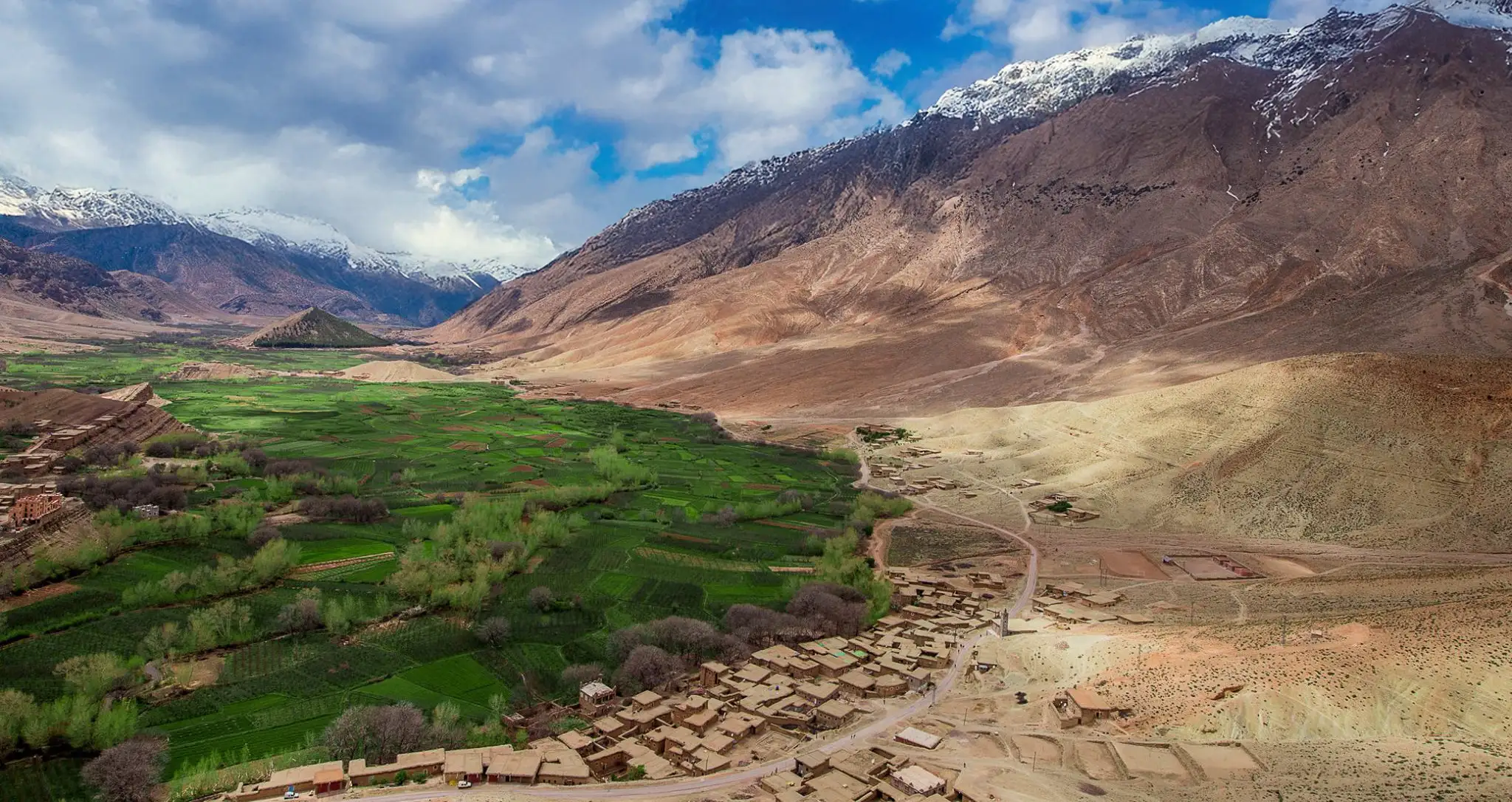
When people ask me about Morocco’s best-kept secrets, I immediately think of Aït Bouguemez. Nestled in the heart of the M’Goun Geopark in Morocco’s High Atlas Mountains, this stunning valley stretches for about 30 kilometers, cradled between dramatic mountain slopes and boasting a vibrant patchwork of orchards, fields, and traditional Berber villages. It’s no wonder locals call it “The Happy Valley” – there’s something truly magical about this place that stays with you long after your visit.
For travelers seeking authentic experiences off the beaten path in 2025, Aït Bouguemez offers a perfect blend of breathtaking nature, living traditions, and sustainable tourism. Having spent considerable time exploring this unique region, I’m excited to share everything you need to know about one of Morocco’s most extraordinary destinations.
The Aït Bouguemez Valley sits in Morocco’s central High Atlas Mountains at elevations ranging from 1,800 to 2,100 meters. Part of the larger M’Goun Geopark (the first UNESCO Geopark in Morocco, Africa and the Arab world), the valley is located:
The valley’s main administrative center is Tabant, where you’ll find most services, including the weekly Sunday souk (market).
Getting there requires a bit of effort, but that’s precisely what keeps this gem relatively untouched. The most common route is taking a grand taxi from Azilal to Tabant, which takes around 2 hours and costs approximately 40 dirhams. The roads to the valley are mostly paved, though mountain conditions can sometimes affect travel, especially during winter snowfalls.
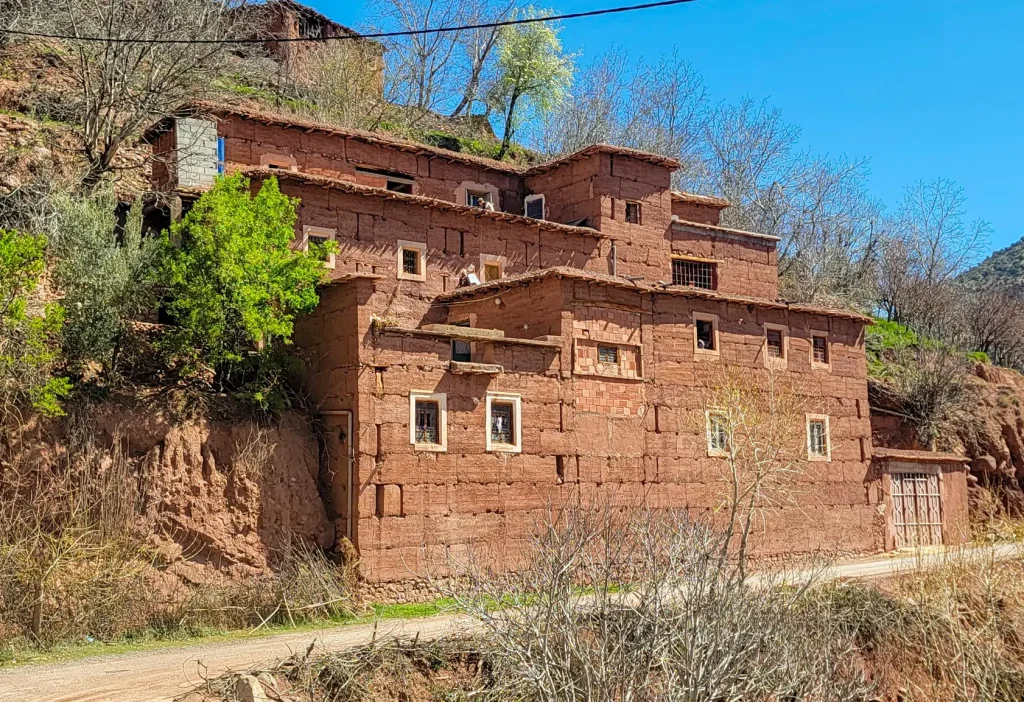
What makes Aït Bouguemez truly special is its people and their way of life. Home to around 15,000 inhabitants spread across 32 villages, the valley maintains traditional Berber (Amazigh) culture and social structures that have adapted smartly to harsh mountain conditions over thousands of years.
Walking through the valley’s villages feels like stepping back in time. The traditional earthen architecture – houses built of pisé (rammed earth), stone, and wood – blends perfectly into the landscape. Most impressive are the ancient communal granaries, particularly:
What’s fascinating about Aït Bouguemez is how the community governs itself. Villages still operate largely according to traditional customs, with family heads gathering after Friday prayers to discuss community matters – from irrigation maintenance to managing natural resources. Decisions are made by consensus, showing the remarkable resilience and adaptability of these mountain communities.
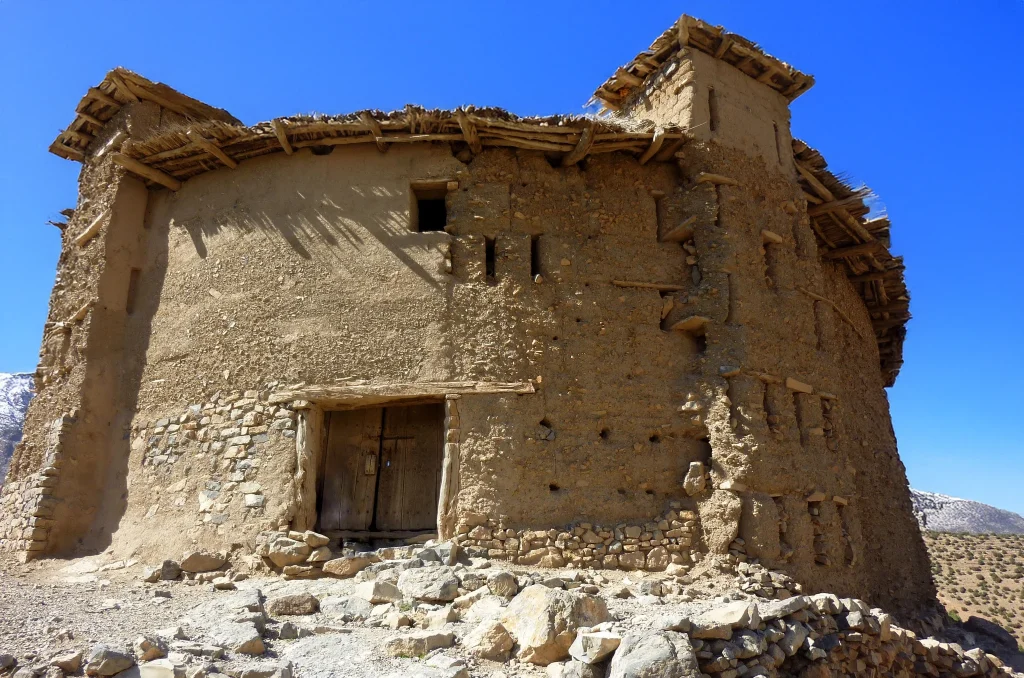
One of the most remarkable aspects of life in Aït Bouguemez is the “Agdal” system – an ingenious traditional practice of resource management that scientists now study as a model of sustainability. The Agdal represents communal rules for managing pastures and forests, with specific opening and closing dates that respect natural cycles.
For example, high mountain pastures are closed until late May (the 30th, to be precise), allowing vegetation to fully regenerate before herds arrive. Anyone arriving early faces community penalties. Similarly, village forests operate under precise rules about when and how much wood can be harvested. This sophisticated system has helped maintain biodiversity and prevent overexploitation for generations.
French and Moroccan researchers have discovered that these traditional opening dates perfectly align with plant reproductive cycles – a testament to the ecological wisdom embedded in local traditions.
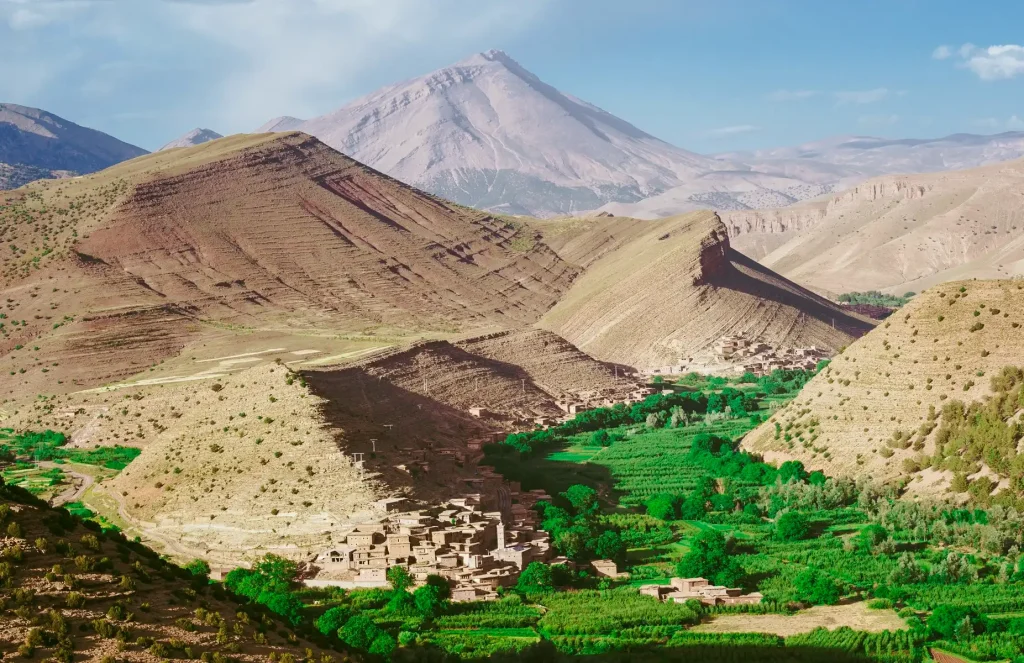
The valley’s stunning natural setting is defined by the contrast between the lush green valley floor and the stark, dramatic mountains surrounding it. Some of the most spectacular natural attractions include:
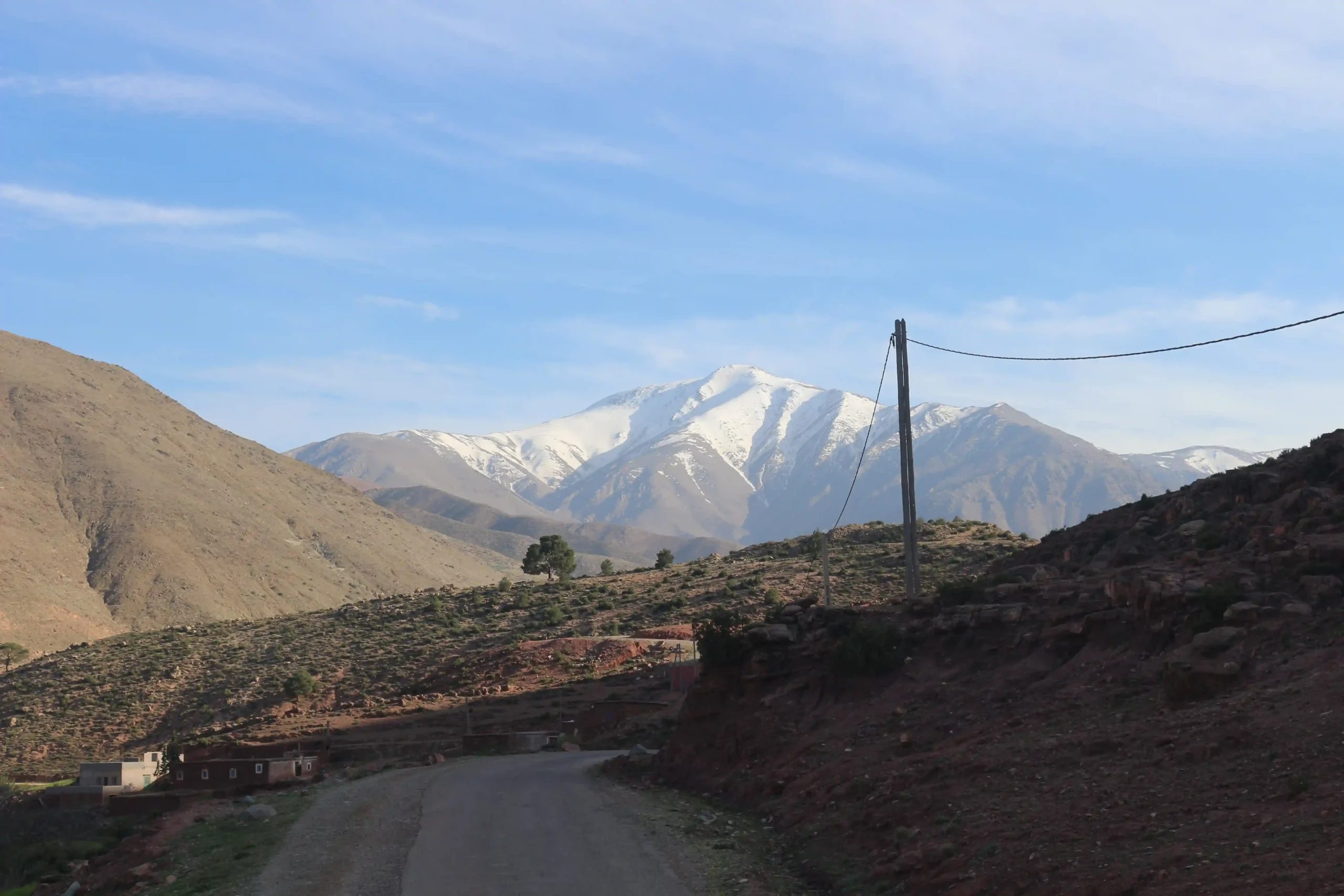
The crown jewel of the region is Mount M’Goun (4,071 meters), Morocco’s third-highest peak. Trekking enthusiasts can challenge themselves with a multi-day ascent, typically following the route from Aït Bouguemez through Tarkeddit and Ighil M’Goun. This spectacular trek typically takes at least four days and should be undertaken with qualified guides.
For less experienced hikers, other nearby summits offer equally breathtaking views with less technical difficulty, including Jbel Azourki (3,670 meters) and Igoudamen (3,500 meters).
One of the most magical spots in the region is the temporary Lake Izourar. Perched at about 2,600 meters altitude, this seasonal lake appears when snow melts in spring, creating a stunning mirror effect with the surrounding snowy peaks. During summer, the water gradually infiltrates or evaporates, transforming the area into pastureland where nomadic shepherds camp from April to August.
These spectacular limestone gorges carved by the Oued Lakhdar (Green River) showcase the raw power of nature. The towering walls and the clear flowing water create a dramatic landscape that’s perfect for hiking and photography.
For those fascinated by earth science, Aït Bouguemez offers some remarkable sites:
Just 2 km from Tabant village, you can observe some of the world’s oldest known dinosaur footprints impressed in limestone slabs. These tracks include both herbivorous sauropods (large oval prints) and carnivorous theropods (three-toed prints), dating from the late Secondary Era.
About 1.5 million years ago, at the beginning of the Quaternary period, the entire Aït Bouguemez valley was actually a large lake, blocked by a natural rockfall dam near present-day Agouti. Over millennia, the Aït Bouguemez river gradually pierced this paleo-dam, draining the lake and creating the valley we see today.
What makes Aït Bouguemez special is the authentic, immersive experiences it offers visitors. Here are some of the best ways to experience the valley:
The valley is a paradise for outdoor enthusiasts, with activities for all levels:
To truly understand valley life, participate in one of these authentic workshops:
The valley is increasingly focused on sustainable tourism that benefits local communities and preserves the environment:
Accommodation in Aït Bouguemez ranges from simple to comfortable, all offering warm Amazigh hospitality:
For dining, options include:
Local specialties to try include tagines with mountain herbs, freshly baked bread, honey, and walnuts from local orchards.
Each season offers a different experience in Aït Bouguemez:
The valley maintains traditional Berber customs, and visitors should be respectful:
Learning a few basic phrases in Tamazight (the local Berber language) will be greatly appreciated:
If possible, time your visit to coincide with one of these special events:
This 4-day sporting and cultural event offers six different routes of varying distances and difficulty levels, suitable for families, amateurs, and experts. It’s not just about running but celebrating the culture and landscape of the High Atlas.
This unique festival celebrates pastoral traditions with site visits, workshops with shepherds and artisans, academic presentations, storytelling, and musical evenings. Meals are served in traditional Berber tents, creating an authentic immersive experience.
The Aït Bouguemez Valley is increasingly recognized for its ecological importance:
The valley’s river system (Oued Lakhdar) is designated as both a Site of Biological and Ecological Interest (SIBE) and a Ramsar wetland site of international importance. It represents one of North Africa’s few remaining natural mountain river ecosystems, with sustained water flow even during summer – making it a biodiversity hotspot.
The valley’s traditional community organization is currently being registered as an APAC (Indigenous and Community Conserved Area) with the International Union for Conservation of Nature (IUCN). This recognition acknowledges how traditional social practices and cultural conservation methods have successfully preserved biodiversity across agriculture, pastoralism, and community cooperation for generations.
What strikes me most about Aït Bouguemez is the perfect balance between humans and nature. The carefully terraced fields, the ingenious irrigation systems, the sustainable forest management – everything speaks of generations of careful adaptation to a challenging mountain environment.
Walking through villages where decisions are still made communally, where resources are shared according to ancient but flexible rules, and where modern innovations are carefully adapted to traditional systems makes me reflect on what we’ve lost in our rush toward modernity elsewhere.
The people of Aït Bouguemez aren’t frozen in time – they’re pragmatic adapters who evaluate each change based on sustainability and community benefit. From adopting apple orchards at high altitudes to managing community-purchased breeding bulls, they demonstrate how tradition and innovation can coexist beautifully.
Perhaps what we outsiders call “The Happy Valley” truly earns its name through this harmony – not just between humans and nature, but between past and present, tradition and innovation, individual needs and community welfare.
As sustainable tourism grows in the valley, more options are becoming available for visitors. However, the heart of the experience remains the same – authentic encounters with remarkable people in a stunning natural setting.
To make the most of your visit:

Project Lead and Writer
Hi, I'm Hafid, a passionate traveler and the voice behind Atlas Insiders. Through this blog, I share my journeys, insights, and expert travel tips to inspire and guide fellow adventurers. From hidden gems to cultural deep dives, my goal is to bring you authentic experiences and practical advice to make your travels more enriching. Join me as we explore the world—one destination at a time.
Leave A Comment